Rayon vs. Polyester Embroidery Thread: Which Is Right for Your Project?
Thread selection affects more than color. For commercial embroidery shops, the right thread can impact stitch clarity, production efficiency, wash performance, finished feel, and the way the final design meets customer expectations.
Rayon and polyester embroidery threads are both professional options, but they are built for different production needs. The best choice depends on the garment, design, stitch count, laundering requirements, and finished look your customer expects.
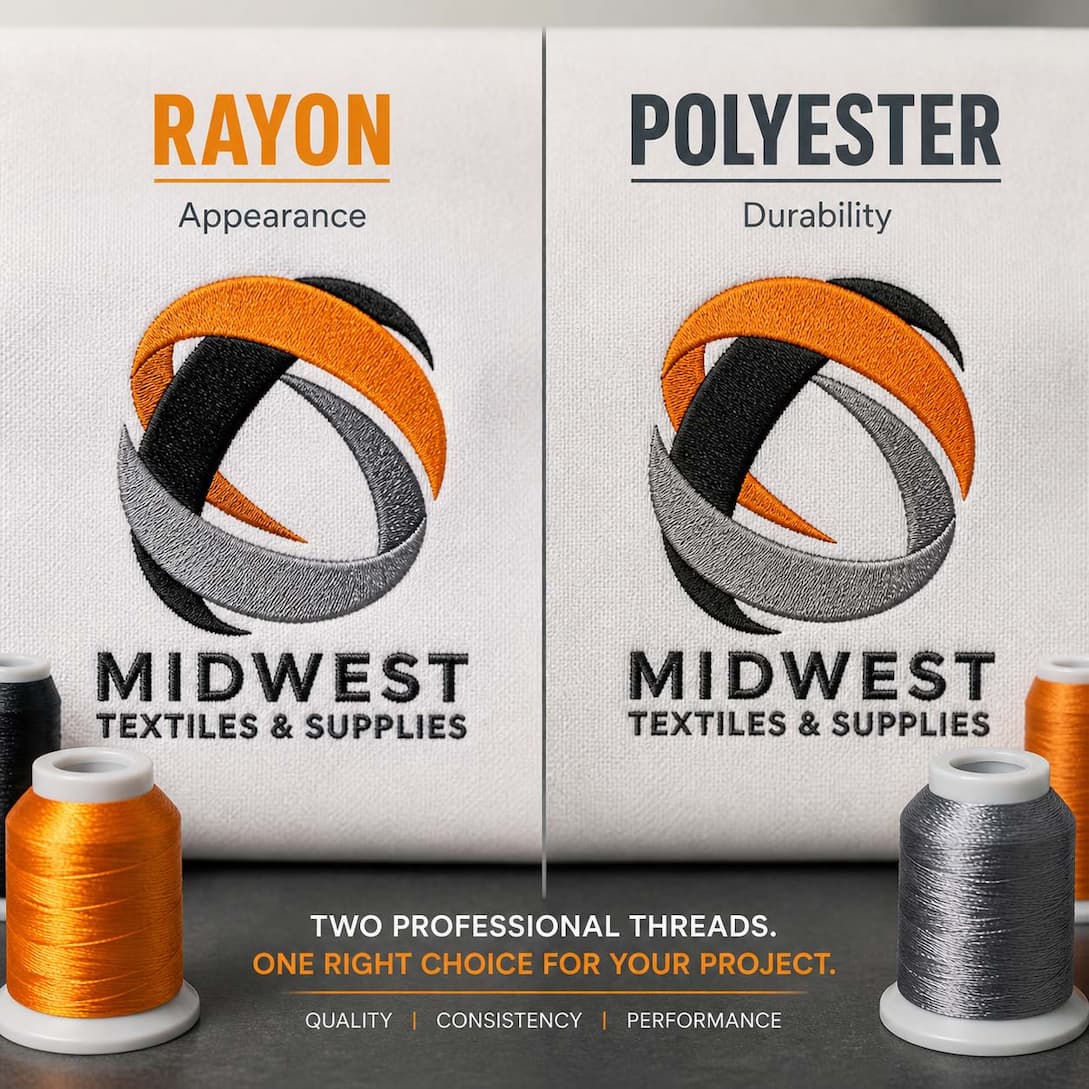
Rayon and polyester both belong in commercial embroidery, but they solve different needs.
Use rayon when the finished look and soft hand are the priority. Use polyester when the job needs added strength, colorfastness, and repeated wash performance.
Soft hand, rich sheen, and a smooth decorative finish for designs where appearance is the priority.
- Fashion embroidery
- Decorative apparel
- Fine detail designs
Strong, colorfast, and dependable for frequent laundering, hard-use garments, and production work.
- Uniforms and workwear
- Towels and linens
- Caps, bags, and patches
Start with the job requirements, then choose the thread that supports the finished result.
A thread should not be selected by color alone. Consider the garment type, end use, wash requirements, and desired finish before choosing between rayon and polyester. Production factors such as backing, needle selection, stitch density, and bobbin setup should then be matched to support the thread and fabric.
Soft hand, rich finish, and decorative appearance.
Durability, colorfastness, and wash performance.
Appearance, feel, durability, washing, and safer-use cases.
Fast recommendations for common commercial applications.
Rayon is chosen when softness, sheen, and decorative appearance matter most.
Rayon embroidery thread, often associated with viscose fiber, is known for its smooth finish, soft hand, and rich silk-like sheen. It is a strong choice for embroidery jobs where the visual finish is the main priority.
In production, rayon works well for fashion embroidery, decorative apparel, home decor, corporate wear where bleach is not required, and fine detail designs that benefit from a refined thread appearance.
- Best for appearance: rich sheen, smooth finish, and decorative presentation
- Best applications: fashion embroidery, decorative apparel, home decor, and detail-focused designs
- Production note: a good option when soft hand and premium-looking finish matter most
Choose rayon when the customer cares most about a soft feel, smooth finish, and decorative thread sheen. It is especially useful on designs where the final look carries more weight than heavy wash performance.
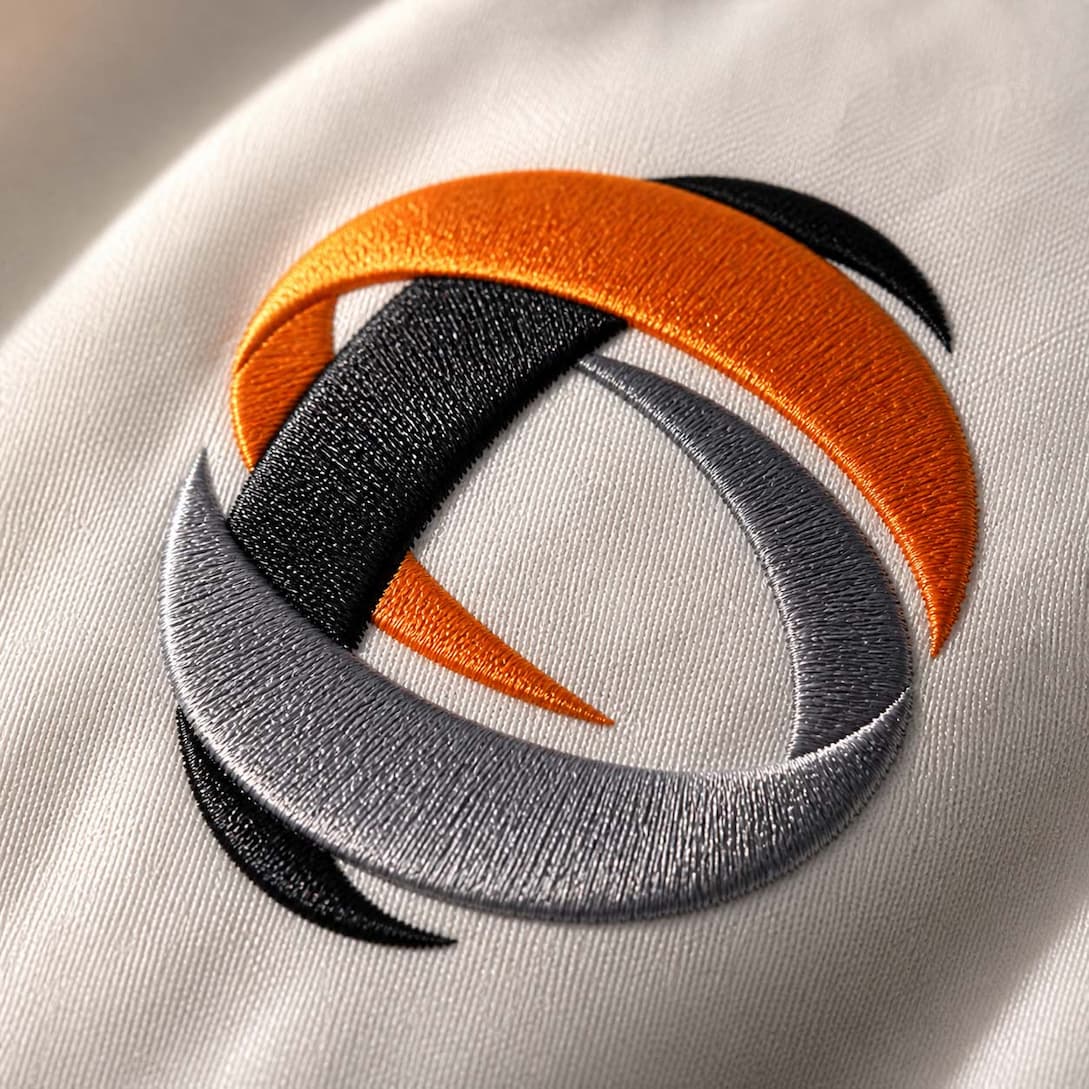
Choose polyester when the finished garment needs added strength, colorfastness, and dependable performance through repeated laundering or daily wear.
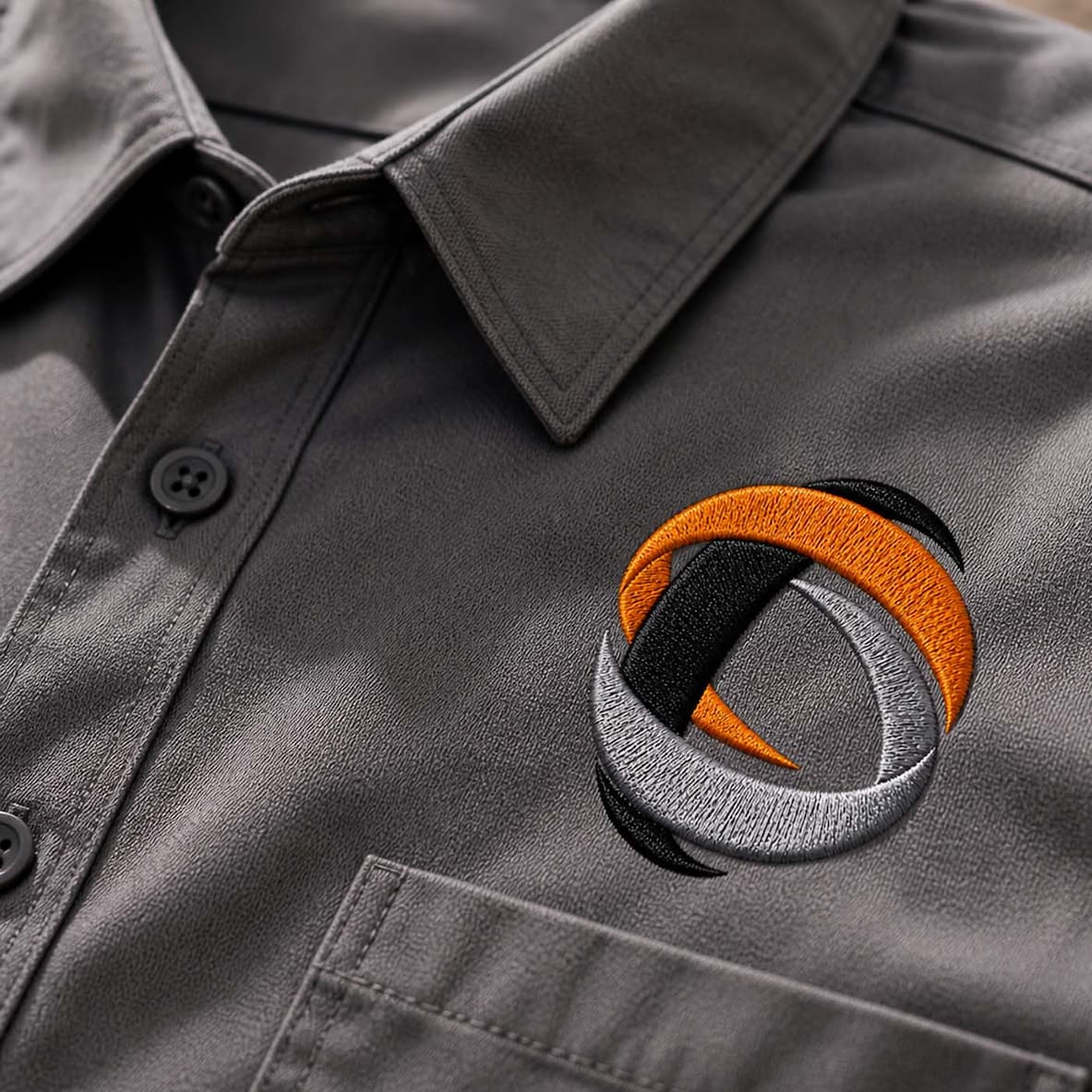
Polyester is the practical workhorse for durability-focused embroidery jobs.
Polyester embroidery thread is built for strength, wash resistance, and colorfast performance. For many commercial embroidery shops, it is the safer first choice when garments will see repeated laundering, hard use, or demanding end-use conditions.
Polyester is commonly used for uniforms, workwear, towels, children's apparel, caps, bags, patches, promotional products, and other production jobs where durability is a priority.
- Best for durability: stronger performance under frequent washing and hard use
- Best applications: uniforms, towels, children's apparel, caps, bags, patches, and promotional items
- Production note: a dependable option for high-volume shops and repeat orders
Compare rayon and polyester in production terms.
Both thread types are useful in commercial embroidery. The stronger choice depends on whether the job calls for visual finish, soft hand, rugged performance, wash resistance, or chemical exposure protection.
Appearance
Rayon is known for a rich, silk-like sheen and refined finish. Polyester also produces professional results, but it is usually selected first for performance-driven applications.
Durability
Polyester offers added strength for frequent washing, active use, and production jobs where the finished item needs to hold up over time.
Feel
Rayon is often preferred when a softer hand is important. This makes it useful for apparel where the embroidered area needs a smoother, more refined finish.
Washing and Cleaning
Polyester is the better choice for repeated laundering and jobs where wash resistance or bleach exposure may be part of the garment's use case.
Which thread should a shop try first?
Use this as a practical starting point for common commercial embroidery applications. Final selection should always account for fabric type, design details, wash requirements, and customer expectations.
| Application | Recommended Thread | Reason |
|---|---|---|
| Uniforms and workwear | Polyester | Stronger performance under frequent washing and harder use |
| Towels and linens | Polyester | Better for repeated laundering |
| Children's apparel | Polyester | Good durability and wash resistance |
| Fashion embroidery | Rayon | Softer hand and refined sheen |
| Decorative apparel | Rayon | Strong visual finish and smooth appearance |
| Caps, bags, and patches | Polyester | Better for rugged materials |
| Corporate polos | Either | Rayon for premium appearance; polyester for laundering durability |
| White garments exposed to bleach | Polyester | Better chemical resistance |
Midwest Textiles & Supplies helps shops choose thread with production in mind.
Choosing thread is part of a larger production decision. The right choice depends on the garment type, end use, wash requirements, and the finished look you’re trying to achieve. Once the thread is selected, production factors like backing and stabilizers, needle selection, stitch density, and bobbin setup should be matched to support both the thread and the fabric.
Midwest Textiles & Supplies supports embroidery shops with thread, backing and stabilizers, bobbins, needles, and related supplies so production teams can maintain consistent stitch quality, reduce downtime, and make better supply decisions.
1. Fabric Match thread to the garment or material.
2. Use Consider how the item will be worn, washed, or handled.
3. Finish Decide whether sheen, softness, or durability matters most.
4. Supplies Pair thread with the right needle, backing, and bobbin setup.
Many commercial shops benefit from keeping both options available.
Choose rayon when softness, sheen, and decorative appearance matter most. Choose polyester when durability, colorfastness, washing performance, and reliability matter most.
For shops running a wide range of customer jobs, stocking both rayon and polyester gives the production team more flexibility when matching thread to fabric, use case, and finished appearance.
- Is rayon or polyester embroidery thread better?
Neither is automatically better. Rayon is often the right choice for a soft hand and rich decorative finish. Polyester is often the right choice for durability, colorfastness, washing performance, and hard-use applications.
- When should I choose rayon?
Choose rayon for fashion embroidery, decorative apparel, home decor, fine detail designs, and corporate wear when bleach exposure is not expected.
- When should I choose polyester?
Choose polyester for uniforms, workwear, towels, children's apparel, caps, bags, patches, promotional products, frequent laundering, and white garments that may be exposed to bleach.
- Can MTS help choose the right thread?
Yes. Contact Midwest Textiles & Supplies with the garment type, design details, expected washing requirements, and production needs so we can help point you toward a practical option.